

Judgment axis | Key judgment |
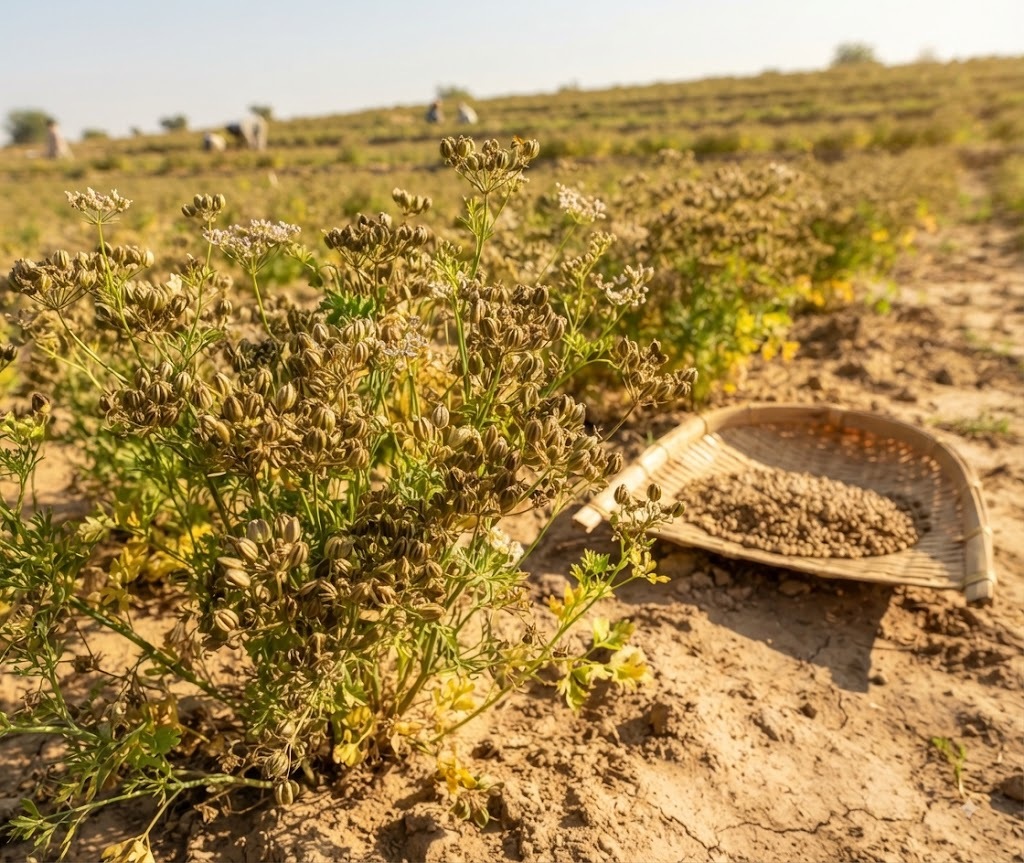
| Item Identity | Coriander is Coriandrum sativum L. of the Apiaceae family and is an annual crop in which fresh leaves, stems, and dried fruit are all utilized as food. Kew currently recognizes it as an accepted species. ( Plants of the World Online ) |
| Key role | The Fresh Herb Market and Dried Spice Market branch out from a single plant . Fresh leaves are used for dining out, Asian food, salads, and sauces, while ripe dried fruits are managed as raw materials for spices, seasonings, powders, and oils. |
| Harvesting principle | For fresh leaves, harvesting takes place during the vegetative growth stage when the marketability of the leaves and stems is high, while for seeds, harvesting takes place after flowering and fruiting when the fruit is fully mature. The two harvesting systems are not treated as the same Product/Lot. |
| Product separation | Fresh Leaf/Stem → Washed/Trimmed Herb → Fresh Pack and Mature Fruit → Dried Whole Coriander → Ground/Powder → Oil/Extract are managed as separate products. |
| Separation of similar items | It is a separate plant entity from Apiaceae plants such as cumin, parsley, celery, and caraway. “Coriander seed” is a trade name, and botanically, it needs to be managed as a fruit. |
| Domestic statistics | Official national statistical figures representing the cultivation area and production volume of coriander in South Korea, which were not verified in this v1.0 version, will be entered later after verification of the official raw data . |
| Supply and demand risk | For fresh leaves, freshness, temperature, moisture loss, microorganisms, and delivery time are key risks, while for seeds, drying, foreign matter, aroma, pesticide residues, storage, and import price are key risks. |
| Operating Principles | Even for the same plant, Leaf/Stem Products and Fruit/Seed Products are separated from the harvest stage, and each Lot is tracked down to the Buyer RFQ. |
| Final goal | The plan is to connect the fresh herb supply chain and the spice seed supply chain under a single Plant Master, while operating the Product, Lot, and Buyer separately. |
Basic fields | detail |
| Korean name | master |
| English name | Coriander / Cilantro |
| Representative scientific name | Coriandrum sativum L. |
| classification | Apiaceae → Coriandrum → C. sativum |
| Edible parts | Leaves/tender stems / Mature dried fruit |
| Non-edible · Separate management | Roots, hardened stems, sorting residues, etc., are managed as separate products or by-products. |
| Major harvesting stages | For fresh leaves: Vegetative growth stage / For seeds: Fruit ripening stage |
| Basic product form | Fresh Leaf·Stem·Whole Plant Herb·Dried Fruit·Ground/Powder·Oil |
| Basic processing stage | Fresh leaves: Harvest → Sorting → Washing → Pre-cooling → Packaging / Seeds: Harvest → Drying → Threshing → Sorting → Grinding |
| Basic use | Fresh vegetables · Flavored herbs · Dining out · Sauces · Spices · HMR · Processed foods |
| Similarity Principle | Even within the same Apiaceae family, there is a separate Plant Entity from cumin, caraway, parsley, etc. |
Kew treats various past variety names, such as Coriandrum sativum var. vulgare, as synonyms for the current C. sativum. Therefore, variety names from past seed and academic records are linked to the Synonym field without creating a new Primary Plant entry. ( Plants of the World Online )
Product Master
Product | Product stage | Key Management Standards |
| Coriander Seed/Planting Lot | breeding materials | Variety · Seed Source · Germination · Lot |
| Fresh Whole Plant | Raw herbs | Whether harvest date, leaf color, stem, and roots are included |
| Fresh Leaf & Stem | Key Fresh Leaf Product | Freshness, foreign matter, appearance, harvest date |
| Trimmed Coriander | Pre-treated products | Removal of roots and old leaves · Specifications |
| Washed Coriander | Washed items | Washing water, hygiene, microorganisms, moisture management |
| Fresh Packed Cilantro | Distributed finished products | Weight, Packaging, Storage Temperature, Delivery Time |
| Mature Coriander Fruit | raw seeds | Maturity, Harvest Year, Origin |
| Dried Whole Coriander | spice ingredients | Moisture, purity, scent, foreign matter |
| Cleaned/Graded Coriander | Standardized raw materials | Size, color, foreign matter, other seeds |
| Crushed Coriander | shredded | Raw Material Lot · Crushing Degree |
| Ground Coriander | Crushed product | Particle size, scent, microorganisms |
| Coriander Powder | B2B raw materials | Raw material purity, particle size, and safety |
| Coriander Fruit Oil | distilled products | Ingredients Fruit Lot · Ingredients · Batch |
| Coriander Extract | Extracted products | Raw materials, solvents, concentrations, and uses |
| Coriander Spice Blend | Mixed product | Mixing ratio with other spice ingredients such as cumin |
| Buyer-specific Herb Ingredient | specific uses | Fresh/Dried Status · Specifications · Delivery Time |
Classification criteria | Subdivision type | Management principles |
| Plant classification | Coriandrum sativum L. | Separated from other Apiaceae species |
| varieties | Actual varieties such as leaf type, seed/fruit type, etc. | Linked with seed verification |
| Edible parts | Leaf·Stem·Fruit | Essential separation by product |
| Harvesting stage | Vegetative growth, before and after bolting, flowering, fruit maturation | Connected to the end use |
| Cultivation method | Open field, greenhouse, and seasonal cultivation | Regional management |
| Distribution methods | Fresh · Washed · Packed · Dried | Separate Product ID |
| Processing form | Whole·Crushed·Ground·Powder·Oil | Separate Product |
| Final use | Raw Food · Eating Out · Salad · Sauce · Spices · Processed Meat · HMR | Buyer Application |
| Transaction type | Procurement from production areas, regular supply, contract farming, processing contracts | RFQ connection |
| origin | Domestic Regions/Importing Countries | Traceability |
| certification | Eco-friendly, GAP, food safety, etc. | Verify actual certificate |
Kew describes C. sativum as an annual native from the eastern Mediterranean to Pakistan. ( Plants of the World Online )
step | Essential Dataset | Management purpose |
| Cultivation plan | Variety · Leaf/Seed Purpose · Area · Buyer | Determining production direction |
| satellite | Seed Source · Variety · Lot · Germination | Plant Identity |
| sowing | Sowing date, sowing quantity, planting | Production history |
| germination | Date of appearance and germination status | Growth management |
| Growth management | Number of leaves, plant height, bolting | Fresh leaf harvest prediction |
| rising | Temperature, rainfall, humidity, and solar radiation | Production Risk |
| Watering | Water source, supply volume, and timing | Fresh leaf quality |
| dispute | Materials, Timing, and Quantity | Growth and Safety |
| pests | Occurrence, Control, and Chemicals | Quality · Pesticide Residues |
| Fresh leaf harvest judgment | Leaf color, size, bolting, Buyer specifications | Fresh Product |
| Harvest fresh leaves | Date, Section, Weight | Fresh Lot |
| Selection | Yellowing, damage, foreign matter | Marketability |
| purifying | Water quality, process, and hygiene | Fresh cut quality |
| Pre-cooling | Post-harvest temperature management | Freshness |
| Refrigerated storage | Temperature, Time, and Humidity | shelf life |
| Fresh leaf packaging | Weight · Packaging · Lot | delivery |
| flowering | Flowering date and uniformity | Seed production |
| fruition | Fruit formation and maturation | Production volume forecast |
| Seed harvest determination | Fruit ripening, shattering, weather | Harvesting at the right time |
| Seed harvest | Date/Weight | Fruit Lot |
| dry | Method, time, moisture | Zhejiang Province |
| threshing grain | Recovery of profits/losses | B2B raw materials |
| Jeongseon | Removal of stems, soil, and other seeds | water |
| Selection | Color, size, defects | Grade |
| smash | Particle Size · Batch | Powder |
| distillation | Whole Fruit → Oil | Oil Product |
Quality items | Raw leaves | Washed and packaged fresh leaves | Whole Fruit | Ground/Powder | Oil · Finished Products | Public rating |
| scientific name | essential | succession | essential | succession | succession | Public/Verified |
| Edible parts | Leaf/Stem | Leaf/Stem | Fruit | Fruit | Raw material parts | Public |
| mountainous district | essential | essential | essential | succession | succession | Public/Verified |
| Cultivation method | essential | succession | record | succession | If necessary | Member |
| varieties | essential | succession | essential | succession | succession | Verified |
| farmhouse | essential | essential | essential | Raw material connection | Raw material connection | Verified |
| Lot | essential | essential | essential | essential | essential | Verified/NDA |
| Harvest day | essential | essential | essential | succession | succession | Verified |
| appearance | Leaf discoloration, yellowing, damage | Product specifications | Color and wholesomeness | Raw material inspection | By product | Member |
| weight | essential | Packaging weight | essential | Packaging weight | By product | NDA |
| size | Stem and leaf specifications | Packaging specifications | Fruit size | Island | — | Member |
| rating | Fresh leaf grade | Delivery specifications | Spices Grade | Product specifications | Product specifications | Member |
| pests | check | record | check | succession | succession | Verified |
| Yellowing and wilting | core | core | — | — | — | Verified |
| impairment | core | core | check | Raw material inspection | QC | Verified |
| alien substance | core | core | core | core | core | Verified |
| moisture | fresh leaf condition | Quality maintenance | Storage Core | By product | By product | Verified |
| microorganism | importance | core | If necessary | core | By product | Verified/NDA |
| pesticide residues | test | Raw material inheritance | test | Raw material inheritance | Conformity to standards | Verified/NDA |
| incense | Fresh scent | Fresh scent | core | core | core | Member/Verified |
| Cleaning history | — | essential | — | — | — | Verified |
| Pre-cooling and refrigeration | core | essential | — | — | — | Verified |
| Drying history | — | — | essential | succession | succession | Verified |
| Grinding history | — | — | — | essential | succession | Verified/NDA |
| packaging | For shipment | core | essential | essential | essential | Member/Verified |
| Expiration date | Very important | essential | Supplier Standards | By product | By product | Verified |
| Shipment | essential | essential | essential | essential | essential | Verified |
| Returns | record | record | record | record | record | NDA |
| Claim | record | record | record | record | record | NDA |
| Repurchase | Buyer Connection | Buyer Connection | Buyer Connection | Buyer Connection | Buyer Connection | NDA |
ISO operates ISO 2255 regarding whole and ground/powdered coriander products, and revision work is currently underway. For fruit oils, ISO 3516:1997 applies separately. ( ISO )
Lot Master Required Field
Lot ID · Item/Product Type · Scientific Name · Edible Part (Leaf/Stem/Fruit) · Variety · Cultivation Type · Origin/Cultivation Area · Producer · Cultivation Method · Seed Lot · Sowing Date · Harvest Purpose · Harvest Date · Quality Indicators · Weight/Size/Specifications/Grade · Check for Yellowing/Damage/Pests/Foreign Matter · Pesticide Use Records · Pesticide Residue/Microbiological Test Reports · Fresh Leaf Pre-cooling/Washing/Colding History or Seed Drying/Threshing/Sorting History · Raw Material Lot · Grinding/Distillation History · Packaging Date · Use-by Date/Best Before Date · Shipper · Returns/Claims · Repurchase
Customers | Purchase criteria | Cooperation opportunities |
| Domestic coriander farms | Variety, Cultivation Type, Demand, and Shipment Time | contract farming |
| production area distribution organization | Freshness · Joint Selection · Refrigeration | Fresh RFQ |
| wholesale market | Appearance, Weight, Same-day Shipping | Fresh Herb |
| Asian restaurant chains | Aroma, Leaf/Stem Ratio, Freshness | Regular delivery |
| Vietnamese, Thai, Chinese, and Latin American restaurants | Stable supply, cycle, and specifications | Supply by region |
| Hotel · Restaurant | Freshness, uniformity, and packaging | Premium Fresh |
| Food manufacturer | Fresh leaf, powder, and seed forms | Ingredient |
| sauce manufacturer | Fresh leaf scent, powder, extractability | Sauce |
| HMR · Meal Kit | Washing, cutting, and standardization | Ready-to-use Herb |
| School meals | Hygiene, pesticide residues, and delivery time | Washed and packaged products |
| Spices import and distribution company | Whole Fruit · Origin · Moisture | Global RFQ |
| Powder processor | Purity, particle size, scent | Ground Coriander |
| Distribution/Online | Freshness, Small Packaging, Labeling | B2C |
| PB | Fresh Herb/Seasoning Product | OEM·PB |
| exporters | Quarantine, Fresh Food Logistics, and Destination Country Standards | Fresh/Dried Export |
| Research and technology institutions | Variety · Bolting · Cultivation · Storage · Aroma | joint research |
In the international HS system, coriander seeds are located under heading 0909, classified as neither crushed nor ground (0909 21) and crushed or ground (0909 22) . Since cumin is classified separately as 090931/090932, the two items should not be aggregated. ( EUR-Lex )
step | Key variables | Operational judgment |
| Domestic fresh leaf production | Variety, Cultivation Type, Region | Fresh Supply |
| Fresh leaf contract cultivation | Harvest cycle and specifications | Stable supply of dining out and HMR |
| Sorting and washing | Hygiene and freshness | Fresh Product |
| Pre-cooling and refrigeration | Temperature and time | shelf-life |
| Fresh Delivery | Same-day/Regular delivery | Buyer Satisfaction |
| Seed production | Crop Year · Maturity | Spice Supply |
| Drying and threshing | Moisture and purity | Whole Coriander |
| Selection and storage | Foreign matter/stock | Trade Grade |
| import | HS·Origin·Supplier | Global Supply |
| smash | Ground Lot | Processing |
| Distillation and extraction | Fruit Lot·Batch | Oil/Extract |
| food processing | Sauce·Seasoning | Ingredient |
| RFQ · Repurchase | Fresh/Dried Results | Supplier Score |
Trade Dataset
item | v1.0 processing |
| Whole coriander HS | International Classification 090921 Confirm ( EUR-Lex ) |
| Ground coriander HS | International Classification 090922 Confirm ( EUR-Lex ) |
| Korea HS-K | Subsequent verification of official detailed codes by the Korea Customs Service |
| Domestic import volume of seeds | Input after official verification of raw data |
| Domestic import value | Input after official verification of raw data |
| Major countries of origin | Input after verification of raw data by the Korea Customs Service |
| Fresh coriander trade | Separate verification of the actual HS classification of fresh leaves |
| Customs clearance unit price | Calculation by Whole/Ground Product |
| Coriander Oil | HS verification separate from the raw material |
| FTA | Verification by Country, HS, and Rule of Origin |
| Quarantine | Verification by fresh leaves, seeds, and edible seeds |
| Food inspection | Check fresh herbs and dried spices separately. |
Products and processes | Key conditions | RFQ conversion |
| Fresh Whole Coriander | Harvest date · Freshness | Foodservice & Wholesale RFQ |
| Trimmed Coriander | Removal of roots and old leaves | Fresh B2B |
| Washed Coriander | Hygiene, cleaning, microorganisms | School Meals · HMR |
| Cut Coriander | Cutting size · Refrigeration | HMR · Meal Kit |
| Fresh Packed Cilantro | Weight, Packaging, Shipping | Retail/PB |
| Mature Coriander Fruit | Crop Year · Maturity | Spice Processor |
| Dried Whole Coriander | Moisture, Purity, Scent | B2B Spice |
| Cleaned/Graded Fruit | Foreign matter/size | Export/Manufacturer |
| Ground Coriander | Particle size, scent, microorganisms | Sauce/HMR |
| Coriander Powder | Uniformity and safety | Seasoning |
| Coriander Fruit Oil | Raw Material Lot · ISO 3516 | Oil RFQ |
| Coriander Extract | Raw materials, solvents, and concentration | Food Ingredient |
| Spice Blend | Combined with cumin, etc. | HMR · Meat Processing |
| Non-commercial fresh leaves | Yellowing/Damage | Safety verification regarding food conversion |
| stem and root | sorting by-products | Verification by use, such as food and compost |
| Royal family Jeongseon remnants | Seed ringer/damage | Reprocessing/Disposal Decision |
ISO 3516:1997 defines oil obtained from coriander fruits as a separate product and remains the current standard following reaffirmation in 2023. ( ISO )
PRP — Product Research Profile
Gosu PRP operates in two branches.
Fresh Herb PRP
Species → Cultivar → Field → Harvest Stage → Leaf/Stem Quality → Washing → Cooling → Shelf-life → Buyer Application → RFQ Performance
Seed/Spice PRP
Species → Cultivar → Origin → Crop Year → Fruit Maturity → Drying/Threshing → Purity → Whole/Ground Quality → Oil Profile → Buyer Application → RFQ Performance
first of all | Execution item | Performance indicators |
| 1 | Scientific Name, Variety, Edible Part, Harvest Purpose, and Lot are required values | Essential Field Completion Rate |
| 2 | Separation of Fresh Herbs and Seed/Spice Products | Product separation rate |
| 3 | Linking weather, growth, bolting, flowering, fruiting, and harvest data | Field–Lot Connection Rate |
| 4 | Datafication of fresh leaf washing, pre-cooling, and refrigeration history | Cold-chain recording rate |
| 5 | Datafication of seed drying, threshing, and sorting history | Post-harvest record rate |
| 6 | Video AI screening for fresh leaf yellowing, damage, and foreign matter | Selection accuracy |
| 7 | Video AI for detecting foreign substances and similar seeds in seeds | Purity determination rate |
| 8 | Prediction of optimal time for bolting and fresh leaf harvesting | Harvest prediction error |
| 9 | Fresh leaf shelf-life prediction | Waste rate and return rate |
| 10 | Seed production, price, and inventory forecast | Supply Forecast |
| 11 | Fresh/Dried Product–Buyer AI Match | RFQ → Sample Conversion Rate |
| 12 | Delivery, Claim, and Repurchase Runtime Connection | Repurchase rate |
Problem group | Problem Definition | Required data |
| Mixed fresh leaves and seeds | Integrated management of different products simply because they are the same plant | Harvest Purpose |
| Coriander–Cumin confusion | Same Apiaceae and spice species, but different Species and HS | Scientific name · HS |
| Cilantro–Coriander naming confusion | Differences in common names by country and market | Alias Dataset |
| Mixed varieties | Differences in suitability between leaf type and seed type | Cultivar |
| bolting | Changes in fresh leaf quality and harvest period | Weather and growth |
| weather risk | Changes in growth, flowering, and seed production | Climate |
| pests | Decline in marketability and safety of fresh leaves | Pest Spray |
| Decline in freshness of fresh leaves | Post-harvest wilting and yellowing | Harvest–Cold Chain |
| raw leaf microorganisms | Washing, Harvesting, and Distribution Hygiene Risk | Microbiology |
| Disruption of refrigerated logistics | Deterioration in quality of food service and catering deliveries | Temperature Log |
| Variation in seed maturity | Differences in quantity, aroma, and shelf life | Maturity |
| Drying deviation | Changes in mold, moisture, and scent | Drying |
| Foreign matter/other seeds | Seed sorting quality issues | Purity |
| Whole-Ground tracking disconnection | Origin and Lot Identification Weakened After Crushing | Genealogy |
| pesticide residues | Both fresh leaves and seeds are important | Spray·COA |
| dependence on imported raw materials | Seed supply countries and price fluctuations | Trade·Supplier |
| Buyer Spec Difference | Requirements vary by dining out, school meals, sauces, and spices | RFQ Spec |
| Discontinuation of returns and repurchases | Freshness and aroma evaluations are not reflected in production | Buyer Evaluation |
RFQ Type | Public Registration | Verify/NDA |
| Fresh Coriander for Sale | Variety · Region · Expected Harvest | Farm, Volume, Unit Price |
| Fresh Coriander Purchase | Leaves/Stems · Size · Period | Target volume and price |
| Regular supply of fresh leaves | Standard Specifications · Delivery Cycle | Monthly/Weekly Supply Volume · Unit Price |
| contract farming | Variety, Region, Harvest Period | Farms, Area, and Purchase Conditions |
| Cleaning supply | Product form and packaging | Microorganisms, Process, Price |
| Cutting part supply | Cutting specifications and uses | Processing conditions and expiration date |
| Whole Coriander Fruit | Origin · Crop Year | Lot · Price · COA |
| Ground Coriander | Particle size and uses | Raw Material Lot·MOQ |
| Powder | Product Type | Microorganisms · Unit Price |
| Coriander Oil | Raw Material Part · General Spec | ISO · Ingredients · Price |
| Extract | Uses/Product Forms | Process · Concentration · COA |
| Foodservice delivery | Fresh Herb | Cycle · Delivery · Price |
| School meal delivery | Washed and packaged products | Safety and Delivery |
| HMR · Meal Kit | Fresh Cut/Seasoning | Recipe · MOQ |
| OEM·PB | Herb Sauce · Seasoning | Formula · Cost |
| export | Fresh/Dried Product | HS · Quarantine · Price |
| Technology demonstration | Cultivation, refrigeration, and AI sorting | raw data |
| Research cooperation | Variety · Bolting · Storage · Aroma | IP · Exam materials |
① Need Products & Materials
Companies and institutions seeking necessary products, agricultural products, raw materials, and processed goods register purchasing demands. Registered requests are utilized to review cooperation with potential suppliers and producers based on the RFQ Intelligence Library.
Process:
RFQ Registration → Supplier/Product Review → Collaboration Connection → Future AI Matching
Register
② We are looking for production and manufacturing partners. (Need Suppliers & Manufacturers)
Register a request to find necessary production and supply partners, ranging from farms and producer organizations to processing companies, OEM, ODM, and private label manufacturers.
Process:
RFQ Registration → Review of Production & Manufacturing Capabilities → Collaboration Connection → Future AI Partner Matching
Register
③ We are looking for domestic and international buyers. (Need Buyers)
Farmers, producer organizations, and manufacturing companies are requesting cooperation with new buyers, such as domestic and international distributors, importers, brand companies, and food service and catering businesses.
Process:
RFQ Registration → Product & Supply Capability Review → Market & Buyer Connection → Future AI Buyer Matching
Register
Contact : mail@markethub.org
Version | Main contents | situation |
| v1.0 | Plant Identity · Fresh Herb/Spice Dual Product · Production · Quality · RFQ Basic Structure Registration | complete |
| v1.1 | Verification of official domestic production, Fresh market, and HS import raw data, and reflection of ISO 2255 revision | expected |
| v2.0 | Quality, processing, and PRP segmentation by Fresh Leaf, Washed/Cut, Whole Fruit, Ground, and Oil | expected |
| v3.0 | Combination of Farms – On-site Distribution/Cold Storage – Processing Companies – Foodservice/HMR/Spices Buyer Verified Container | expected |