


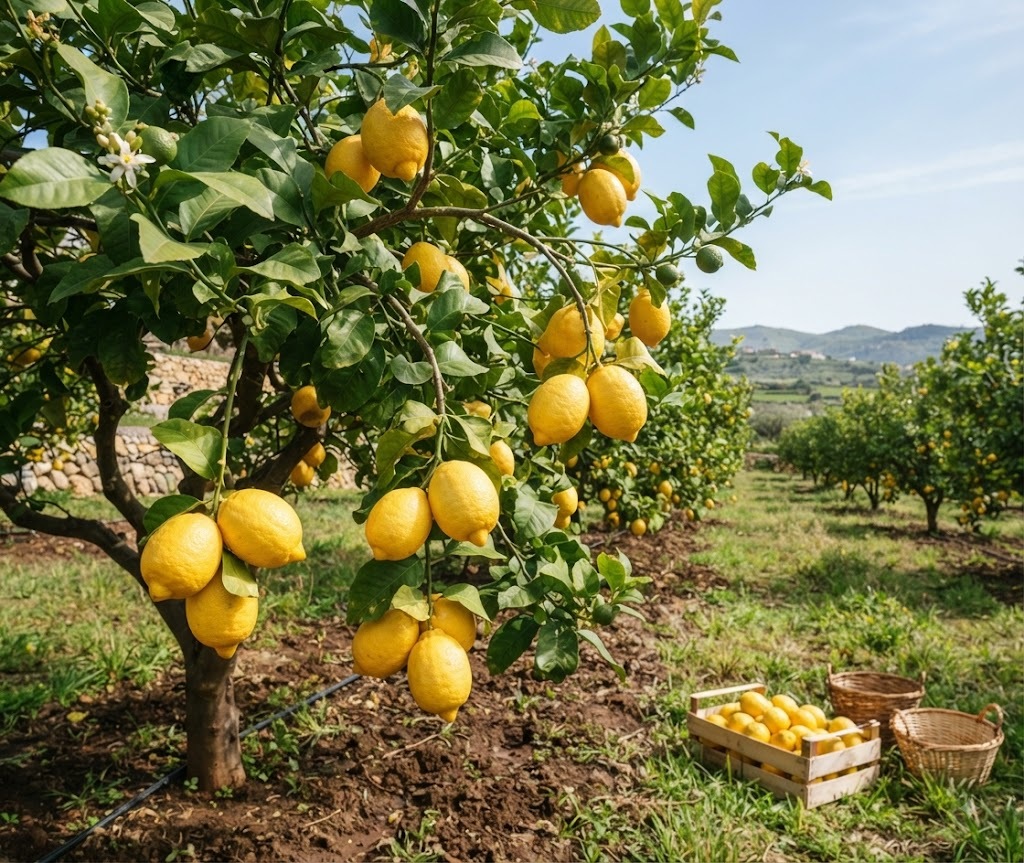
Judgment axis | Key judgment |
| Item Identity | Accepted hybrid fruit of Rutaceae Citrus × limon |
| Key role | Fresh fruit · Dining out · Cafe · Juicing · NFC · Concentrate · Zest · Peel · Dried · Puree · PB ingredients |
| Harvesting principle | Evaluate variety, skin color, juice content, acidity, sugar content, size, use, and distribution distance together |
| Product separation | Fresh, Foodservice, Juice Raw, NFC, Concentrate, Peel, Zest, Dried, and Powder are managed as separate products. |
| Separation of similar items | Tangerine, Orange, Lime, Citron, Grapefruit, Yuzu and Independent Entity |
| domestic production | A cultivation manual for the Rural Development Administration's first domestic variety, 'Jeramon', exists. |
| Domestic statistics | The nationwide exclusive lemon cultivation area and production volume are awaiting verification of official raw data in this v1.0, so further verification will be conducted later. |
| Revenue structure | Domestic production and overseas imports are operated as separate supply containers. |
| Quality Core | Skin color, size, juice, acidity, sugar content, seeds, skin damage, decay, aroma |
| Supply and demand risk | Domestic crop conditions, import origins, quarantine, logistics, exchange rates, inventory, and processing demand |
| Processing risk | Juice yield, acidity variation, peel safety, seeds, pomace, raw material loss |
| Operating Principles | Domestic Orchard + Global Origin + Import Lot + Quality + Processing + Buyer RFQ |
| Final goal | Evaluate supply capacity based on Fresh Grade, Juice Yield, Peel Recovery, and Buyer Accepted Quantity rather than total volume. |
Plant Identity
Basic fields | Lemon Registration Criteria |
| Korean name | lemon |
| English name | Lemon |
| Representative scientific name | Citrus × limon (L.) Osbeck |
| Taxonomy Status | Accepted Hybrid |
| Hybrid Formula | C. maxima × C. medica × C. reticulata |
| classification | Rutaceae · Citrus |
| Ecology Reference | Trees primarily cultivated in subtropical ecosystems |
| Edible parts | pulp and juice |
| Separate food parts | peel and zest |
| Separate management | Seeds, stems, and juice residue |
| Non-edible/Excluded | decay, mold, and severely diseased tissue |
| Major harvesting stages | Immature, commercially ripe, for fresh consumption, for juicing, for processing |
| Basic product form | Whole Fresh·Slice·Wedge·Fresh-cut·Juice·NFC·Concentrate·Purée·Peel·Zest·Dried |
| Basic processing stage | Sorting → Washing → Cutting/Peeling → Juicing → Filtration → Sterilization/Concentration/Drying |
| Basic use | Fresh Fruit · Dining Out · Beverages · Bakery · HMR · Food Manufacturing · PB |
| Similarity Principle | No. 104 Independent of Lime and other Citrus Entities |
Product Master
Product ID | Product type | Key Management Standards |
| LEM-P01 | Nursery Tree | Variety · Rootstock · Seedling Source |
| LEM-P02 | Domestic Orchard Lot | Variety, Orchard, Harvest Date |
| LEM-P03 | Imported Fresh Lot | Origin · Variety · Import Lot |
| LEM-P04 | Jeramon Variety Lot | Variety identification · Domestic cultivation history |
| LEM-P05 | Fresh Premium | Size, skin color, and appearance |
| LEM-P06 | Retail Fresh | Standards, Juice, and Safety |
| LEM-P07 | Household Grade | Appearance and Juice |
| LEM-P08 | Foodservice Grade | Juice, acidity, size |
| LEM-P09 | Café Grade | Juice, Aroma, and Slice Suitability |
| LEM-P10 | School Meal Grade | Safety and Standards |
| LEM-P11 | Processing Grade | Internal soundness and juicing suitability |
| LEM-P12 | Washed Lemon | Washing and peel damage |
| LEM-P13 | Lemon Half | Cut surface · Juice |
| LEM-P14 | Lemon Slice | Thickness, seeds, and peel |
| LEM-P15 | Lemon Wedge | Standards · Food Service |
| LEM-P16 | Fresh-cut Lemon | Microorganisms · Refrigeration |
| LEM-P17 | Raw Lemon Juice | Acidity, Brix, and Juice Yield |
| LEM-P18 | Fresh Lemon Juice | Juicing date · Microorganisms |
| LEM-P19 | NFC Lemon Juice | Raw Material Lot·Batch |
| LEM-P20 | Pasteurized Lemon Juice | Sterilization · Batch |
| LEM-P21 | Lemon Juice Concentrate | Concentration, Acidity, Brix |
| LEM-P22 | Lemon Purée/Pulp | Flesh/Particle Size |
| LEM-P23 | Frozen Lemon Juice | Freezing and thawing |
| LEM-P24 | Lemon Peel | Fruit peel and pesticide residues |
| LEM-P25 | Lemon Zest | Epidermal, Washing, Safety |
| LEM-P26 | Dried Lemon Slice | Moisture and color |
| LEM-P27 | Dried Lemon Peel | Moisture, fragrance |
| LEM-P28 | Lemon Powder | Moisture content and particle size |
| LEM-P29 | Lemon Syrup/Sauce Raw | Juice·Peel |
| LEM-P30 | Bakery Ingredient | Juice·Zest·Peel |
| LEM-P31 | Non-standard health and | Juicing when safety is satisfactory |
| LEM-P32 | Juice Pomace | flesh, membrane, peel |
| LEM-P33 | Seed/Peel Residue | by-product |
| LEM-P34 | PB·OEM finished products | Raw Material Lot · Manufacturing Batch |
Classification criteria | Subdivision type | Management principles |
| Plant classification | Citrus × limon | Hybrid Master |
| Parent Taxa | C. maxima·C. medica·C. reticulata | Relationship |
| varieties | Jeramon · Other verified varieties | Variety Entity |
| origin | Domestic and overseas countries and regions | Supply Entity |
| Cultivation method | Open fields, facilities, etc. | Production Container |
| Sukdo | Immature, commercially mature, and for processing | Harvest Runtime |
| Skin color | Actual measurements of green and yellow tones | Quality |
| Fruit size | Weight · Diameter · Count | Grade |
| crush | Juice Content/Yield | Processing |
| acidity | Product-specific measurements such as acidity and pH | Quality |
| Distribution methods | Whole·Slice·Wedge·Fresh-cut | Product |
| Processing form | Juice·NFC·Concentrate·Purée·Peel·Zest·Dry | Processing |
| Final use | Retail · Food Service · Dining Out · Cafe · Beverage · Bakery · Private Brand | Buyer |
| Transaction type | Domestic procurement, import, periodic supply, OEM, PB | Contract |
step | Essential Dataset | Management purpose |
| Cultivation plan | Variety, Rootstock, Cultivation Type | production base |
| Jongmyo Shrine | Variety · Rootstock · Seedling Lot | Traceability |
| Food ingredients | Orchard · Planting Year | Orchard Master |
| Pension management | Pruning and crown | productivity |
| flowering | Flowering/Full bloom date | Production forecast |
| Fruit set | Fruit set | Yield |
| Enemy | Fruit tree · Timing | Size |
| Growth management | New shoots, canopy, and fruit enlargement | Production |
| rising | Temperature, Precipitation, Solar Radiation, Low Temperature | Risk |
| Watering | Soil moisture | Excessive negligence |
| dispute | Soil testing and fertilization history | Nutrition |
| pests | Monitoring and control | Product rate |
| Excessive negligence | Weight and Diameter | Forecast |
| coloring | Skin color | Harvest |
| Sweetness | °Bx | Quality |
| Sando | acidity·pH | Quality |
| Juice amount | Juice weight and yield | Processing |
| Harvest judgment | Variety, Color, Juice, Acidity, Uses | Product Branch |
| harvest | Harvest Lot | Traceability |
| Origin sorting | Size, wound, and lesion | Grade |
| Pre-cooling | Temperature control as needed | Freshness |
| Seon and | Size, Appearance, Color | Market Grade |
| packaging | Buffer · Count | Logistics |
| save | Temperature, humidity, and period | Supply |
| Import procurement | Export Lot·Container | Import |
| Domestic stock | Import Lot · Quarantine · Customs Clearance | Inventory |
| Re-selection | decay, dryness, wounds | Marketable Supply |
| purifying | For fresh fruit and peel | Safety |
| cutting | Half · Slice · Wedge | Foodservice |
| peeling | Peel/Zest | Processing |
| Juicing | Juice Yield | Beverage |
| percolation | Juice | Quality |
| sterilization | By product | Safety |
| concentration | Concentrate | Ingredient |
| smash | Purée/Pulp | Ingredient |
| freezing | Juice/Purée | Frozen |
| dry | Slice/Peel | Dry Product |
| powder | Dried Material | Ingredient |
| shipment | Buyer · Lot · Delivery Date | Delivery |
Lemons are crops that primarily grow in subtropical ecosystems according to Kew standards. Since the Rural Development Administration has a cultivation manual for domestic lemon varieties, domestic cultivation runtime must be verified under actual variety, region, and facility conditions. Specific overseas cultivation standards are not automatically applied to domestic orchards. ( Plants of the World Online )
Quality items | Fresh fruit | Pre-treated products | processed goods | finished product | Public rating |
| Taxon | essential | succession | succession | tracking | Public |
| varieties | essential | succession | succession | tracking | Public |
| origin | essential | succession | succession | Display/Tracking | Public |
| Domestic/Imported | essential | succession | succession | tracking | Public |
| Producers and exporters | tracking | tracking | tracking | - | Verified |
| Farmhouses and orchards | domestic | succession | tracking | - | Verified |
| Importer | imported | succession | tracking | - | Verified |
| Harvest Lot | essential | succession | succession | tracking | Verified/NDA |
| Import Lot | imported goods | succession | succession | tracking | Verified/NDA |
| Harvest day | If possible | succession | tracking | - | Verified |
| weight | Actual measurements | Batch | Input | - | Member |
| diameter | Actual measurements | Selection | - | - | Member |
| Count Size | Import · B2B | - | - | - | Member |
| Family type | test | Selection | - | - | Member |
| Skin color | core | tracking | Peel Product | By product | Member |
| Peel thickness | By use | Peel/Zest | process | By product | Verified |
| skin wound | core | Selection | Processing judgment | - | Verified |
| Sweetness | Actual measurements | Input | Juice | Spec | Verified |
| Sando | core | Input | core | Spec | Verified |
| pH | If necessary | Input | core | Spec | Verified |
| Juice amount | core | Input | Yield | Spec | Verified |
| seed | By variety | eliminate | process | - | Member |
| incense | Variety · Peel | Peel/Zest | Ingredient | Spec | Verified |
| Pressure | test | Processing judgment | - | - | Verified |
| Drying and moisture loss | Distribution products | tracking | - | - | Verified |
| lesions | exception | exception | Safety assessment | - | Verified |
| corruption | exception | exception | Food conversion ban | - | Verified |
| mold | exception | exception | Food conversion ban | - | Verified |
| alien substance | test | purifying | Compliance with standards | Compliance with standards | Verified |
| pesticide residues | core | core | Compliance with standards | Compliance with standards | Verified/NDA |
| microorganism | If necessary | Fresh-cut | Juice/Purée | Compliance with standards | Verified/NDA |
| Cold-chain | imported goods | succession | tracking | - | Verified/NDA |
| Save history | core | succession | tracking | - | Verified |
| Product rate | core | - | - | - | NDA |
| Juice extraction yield | - | - | core | cost | NDA |
| Peel Yield | - | core | Input | cost | NDA |
| Zest Yield | - | core | Input | cost | NDA |
| Concentrate Yield | - | - | core | cost | NDA |
| Dry Yield | - | - | core | cost | NDA |
| Expiration date | The relevant city | The relevant city | processed goods | mark | Member |
| Returns and Claims | record | record | record | record | NDA |
| Repurchase | connection | connection | connection | connection | NDA |
Food Safety Korea classifies lemons as citrus fruits, and applies the individual standards when both individual pesticide standards and citrus group standards exist. For pesticides for which separate standards have not been established, the principle of 0.01 mg/kg or less applies under the current system. For actual Lot determination, the latest standards at the time of inspection must be reconfirmed. ( Food Safety Korea )
In particular, Lots that use peel and zest as food ingredients are designed to additionally verify residual pesticides, washing, wax, and treatment history on the surface of the peel compared to Products that use only the flesh.
Lot Master Required Field
Lot ID · Item/Product Type · Scientific Name · Hybrid Status · Variety · Domestic/Imported · Country/Region of Origin · Production Area/Orchard · Producer/Exporter/Importer · Harvest Lot · Harvest Date · Export Packing Lot · Container ID · Arrival/Quarantine/Customs Clearance Date · Import Lot · Weight/Diameter/Count · Fruit Shape · Skin Color/Skin Thickness · Sugar Content · Acidity · pH · Juice Volume · Presence of Seeds · Aroma · Skin Damage/Burnt/Dryness · Diseases/Spoilage/Mold · Pesticide Use History · Pesticide Residue/Microbiological Report · Cold-Chain/Storage History · Raw Material Lot · Washing/Cutting/Peeling/Zest/Juicing/Filtering/Pasteurization/Concentration/Purée/Frozen/Drying/Powder History · Packaging Date · Best Before Date · Shipper · Returns/Claims · Repurchase
Customers | Purchase criteria | Cooperation opportunities |
| domestic lemon farms | Variety, Crop Type, Harvest Season | contract production |
| production area distribution organization | Variety, Size, Shipment Volume | Joint screening |
| importer | Country · Breed · Size · Season | Import RFQ |
| wholesale market | Origin, Size, Color | Fresh |
| Large-scale distribution | Appearance, Juiciness, and Safety | Retail |
| online | Domestic/Imported · Variety · Packaging | D2C |
| Hotels and Restaurants | Juice, Size, and Slice Suitability | Foodservice |
| cafe | Juice, acidity, aroma | Beverage |
| School and public meals | Safety and Standards | Regular delivery |
| Fresh-cut company | Slice/Wedge · Microorganisms | Convenience |
| Juice manufacturer | Juice Yield·Acid·Brix | Processing |
| Beverage manufacturer | NFC · Concentrate Spec | Ingredient |
| Bakery | Juice·Zest·Peel | Ingredient |
| Confectionery and Desserts | Zest·Purée·Slice | Specialty |
| Sauce and dressing preparation | Juice·Acidity | Ingredient |
| dried food | Slice·Peel | Dry |
| PB·OEM | Juice · Syrup · Dried · Powder | Product Development |
| Research Institute | Domestic varieties, cultivation, processing, and storage | PRP |
step | Key variables | Operational judgment |
| Domestic production | Variety, Crop Type, Harvest Season | Domestic Supply |
| Overseas production | Country, Variety, Season | Global Supply |
| Contract procurement | Variety · Size · Product | Procurement |
| Harvesting and sorting | Ripeness, peel, juice | Grade |
| export packaging | Box·Count·Label | Trade |
| Quarantine | Korean import conditions | Market Access |
| shipment | Container · Schedule | Logistics |
| transit | Time and temperature | Arrival Quality |
| Domestic quarantine and customs clearance | HS · Country of Origin · Inspection | Release |
| domestic warehouse | Lot·Cold-chain | Inventory |
| Re-selection | decay, dryness, appearance | Marketable Supply |
| Fresh Distribution | Size·Color·Origin | Retail |
| Dining Out & Cafe | Juice·Slice | Foodservice |
| Juicing | Acid·Yield | Processing |
| NFC · Concentrated | Product Spec | Beverage |
| Fruit peel · Zest | Safety and fragrance | Ingredient |
| dry | Slice·Peel | Dry |
| RFQ | Origin/Variety/Product | Match |
| Repurchase | Quality · Delivery · Claim | Repeat trading |
HS·Trade Management
Product | HS Operating Principles |
| Fresh lemon | Current Korea Customs Service HSK verification |
| lime | Review of No. 104 and the separation of three items and statistical ranges |
| frozen lemons | Frozen Fruit Classification Verification |
| Lemon juice | Fruit Juice HS Check |
| NFC Juice | Check concentration status and Brix |
| Lemon concentrate | Confirm Concentrated Juice |
| Lemon Purée | Check Prepared/Preserved Products |
| dried lemon | Check Dried Product |
| Lemon Peel | Check three times regarding Citrus Peel |
| Lemon Powder | Verify three times depending on the processing status |
| saplings | Live Plant · Quarantine |
Products and processes | Key conditions | RFQ conversion |
| Premium Fresh | Origin · Variety · Size · Peel | Retail |
| Domestic Fresh | Variety, Origin, Harvest Date | Local Premium |
| Imported Fresh | Country · Date of Arrival · Cold-chain | Import RFQ |
| Foodservice | Juice·Size·Slice Aptitude | dining out |
| Washed Lemon | Whether or not to use the peel | Kitchen |
| Slice | Thickness, Seeds, Appearance | Café/HMR |
| Wedge | Standards · Juice | Foodservice |
| Fresh-cut | Microorganisms · Refrigeration | Convenience |
| Juice Raw | Acid·Brix·Yield | Beverage |
| Fresh Juice | Juicing date · Microorganisms | Foodservice |
| NFC Juice | Raw Material Lot·Batch | Beverage |
| Concentrate | Brix·Acid·Color | Ingredient |
| Purée/Pulp | Flesh/Particle Size | HMR |
| Frozen Juice | Freezing and thawing | Beverage |
| Lemon Peel | Washing and residual pesticides | Food Ingredient |
| Lemon Zest | Fragrance, Skin, Safety | Bakery |
| Dried Slice | Moisture and color | Tea/Food |
| Dried Peel | Fragrance and moisture | Ingredient |
| Powder | Particle size and moisture | Food Ingredient |
| Non-standard health and | Internal soundness | Juice |
| Pomace | peel, membrane, and flesh residue | Recovery |
| Seed | Separation upon existence | Research |
| Corruption Department | Food supply chain exclusion | Waste and resource recovery |
Under the standards of the Korea Food Safety Information System (KFSA), lemons are classified as citrus fruits; therefore, even when the peel or zest is used directly in food, it is necessary to verify the current residue tolerance limits for each relevant pesticide. In particular, for products utilizing peel, a separate Peel-use Verification field is established distinct from Whole Fruit Safety. ( KFSA )
Conversion to functional, pharmaceutical, cosmetic, or fragrance materials is not automatically registered simply because lemons contain specific components. A separate PRP link is established only when the legality, safety, and official research evidence regarding the relevant part of the plant used as a food or cosmetic ingredient have been confirmed.
PRP — Product Research Profile
PRP ID | Product Research Profile |
| PRP-LEM-01 | Citrus × limon Taxonomy–Parent Mapping |
| PRP-LEM-02 | Domestic–Imported Variety Mapping |
| PRP-LEM-03 | Jeramon Production Profile |
| PRP-LEM-04 | Variety–Rootstock Performance |
| PRP-LEM-05 | Flowering–Fruit Set |
| PRP-LEM-06 | Variety–Harvest Window |
| PRP-LEM-07 | Fruit Size–Juice Content |
| PRP-LEM-08 | Color–Maturity–Acidity |
| PRP-LEM-09 | Variety–Brix/Acid |
| PRP-LEM-10 | Harvest–Shelf-life |
| PRP-LEM-11 | Import Transit–Weight Loss |
| PRP-LEM-12 | Cold-chain–Decay |
| PRP-LEM-13 | Variety–Juice Yield |
| PRP-LEM-14 | Raw Lemon–NFC Suitability |
| PRP-LEM-15 | Raw Juice–Concentrate Yield |
| PRP-LEM-16 | Variety–Peel/Zest Suitability |
| PRP-LEM-17 | Peel Safety–Residue Profile |
| PRP-LEM-18 | Slice/Dry Suitability |
| PRP-LEM-19 | Off-grade Lemon Recovery |
| PRP-LEM-20 | Origin–Variety–Acid–Juice Yield–Buyer AI Match |
first of all | Execution item | Performance indicators |
| 1 | Taxon, Variety, Origin, Harvest Date, and Lot must be required | Input completion rate |
| 2 | Separation of Fresh·Foodservice·Juice·Peel·Dry Product | Product identification rate |
| 3 | Connecting domestic orchards, overseas production areas, and Import Lot data | Supply connection rate |
| 4 | Datafication of quality, certificates, cold chain, and processing history | Lot completion rate |
| 5 | Farm/Supplier–Importer–Processor–Buyer RFQ Connection | Match rate |
| 6 | Video AI Fruit Tree Counting | Production volume forecast error |
| 7 | AI Determination of Fault Size and Color | Grade Accuracy |
| 8 | AI detection of peel defects and lesions | Defect detection rate |
| 9 | AI Harvest Maturity Prediction | Harvest Error |
| 10 | Acidity, Brix, and Juice-Based Product Branch | Classification accuracy |
| 11 | AI Import Arrival Quality Prediction | Arrival Error |
| 12 | Cold-chain anomaly detection | Excursion detection rate |
| 13 | Storage Shelf-life Prediction | waste reduction rate |
| 14 | Juice Yield Prediction | Input–Output Error |
| 15 | Peel/Zest Yield Prediction | Yield Error |
| 16 | Fresh vs Juice Automatic Branching | Recovery rate |
| 17 | Peel·Pomace Mass Balance | By-product traceability |
| 18 | Domestic–Import Supply Gap Analysis | Supply forecasting accuracy |
| 19 | AI Buyer Match | Sample approval rate |
| 20 | Product→Orchard/Import Lot Traceback | Traceability rate |
| 21 | Buyer Evaluation → Supplier/Orchard Feedback | Repurchase rate |
Problem group | Problem Definition | Required data |
| Citrus Taxonomy mixed | Mixed names of lemon, lime, and citron | Taxonomy |
| Lack of distinction between domestic and imported products | Distortion in supply structure analysis | Origin |
| Lack of variety information | Comparison of quality and harvest time is restricted. | Variety |
| Lack of production information for Zeramon | Domestic Supply Forecasting Limits | Production |
| Lack of domestic official statistics | Limitations on determining industry size | Statistics |
| weather adaptability | Production variation by domestic cultivation area | Climate |
| Fruit set deviation | Change in production volume | Fruit Set |
| Size deviation | Fresh Grade Discrepancy | Size |
| Variation in peel color | Market quality difference | Color |
| pH deviation | Differences in Foodservice and Juice Specs | Acidity |
| Brix deviation | Beverage Batch Difference | Brix |
| Variation in juice content | Fluctuation in processing yield | Juice Content |
| Variation in peel thickness | Zest·Peel yield difference | Peel |
| Seed mixing | Slice · Juice Quality | Seed |
| Harvest time error | Decrease in juice content and shelf life | Maturity |
| Fruit peel damage | Fresh·Peel Product Loss | Surface |
| pests | Reduction in product price rate | Pest/Disease |
| Crop conditions in importing regions | supply instability | Global Production |
| Changes in quarantine conditions | Supply interruption risk | Quarantine |
| Customs clearance delay | Shelf-life reduction | Customs |
| Breaking the cold chain | Deterioration of arrival quality | Temperature |
| moisture loss | Weight and appearance degradation | Storage |
| decay and mold | Disposal · Claim | Quality |
| Changes in import inventory | Excess/Out of stock | Inventory |
| Fresh Grade Rate Variation | Difference in available sales volume | Sorting |
| Variation in juice extraction yield | Juice Cost Fluctuation | Yield |
| NFC and Concentrate mixed | Product definition error | Processing |
| Pesticide residue on fruit peel | Zest·Peel Safety Risk | Residue |
| Insufficient cleaning history | Restrictions on fruit peel use | Processing |
| Unutilized by-products | Recovery loss | Mass Balance |
| Mixed Lemon and Lime Trade Statistics | Market analysis error | HS |
| Discrepancy in contract specifications | Buyer Claim | RFQ |
| Dispersion of test reports | Verification delay | Quality |
| Lot history interruption | Restriction on tracking from origin to finished product | Traceability |
| Repurchase not reflected | Supplier performance non-recycling | Repurchase |
RFQ Type | Public Registration | Verify/NDA |
| Lemon seedlings and rootstocks | Variety/Rootstock | Producer · Lot · Unit Price |
| Jeramon saplings | Variety Name · Supply Type | Supplier, Quantity, Price |
| Domestic fresh fruit | Variety, Region, Shipment Date | Farm, Volume, Unit Price |
| imported fresh fruit | Country · Variety · Size | Import Lot · Price |
| Premium Fresh | Appearance, Size, Color | Grade · Price |
| Foodservice | Size · Juice · Acidity | Cycle/Volume |
| For cafes | Juice Yield · Scent | Regular supply |
| School meals | Safety and Standards | Test Report · Delivery Date |
| Fresh-cut | Slice/Wedge | microorganism |
| Juicing ingredients | Acid·Brix·Yield | Processing yield and price |
| Fresh Juice | Acidity and microorganisms | Batch |
| NFC Juice | Origin · Brix · Acid | COA·MOQ |
| Concentrate | Concentration and acidity | COA · Price |
| Purée/Pulp | Entry/San Island | Sample |
| Lemon Peel | Cleaning and safety | pesticide residues |
| Lemon Zest | Fragrance and peel | Lot·COA |
| Dried Slice | Moisture and color | MOQ |
| Dried Peel | Fragrance and moisture | Report |
| Lemon Powder | Moisture content and particle size | COA |
| Non-standard health and | Internal soundness | Juice Recovery |
| PB·OEM | Juice·Syrup·Dry·Powder | Formula·MOQ |
| Import procurement | Country/Season | FOB/CIF · Contract |
| Technology demonstration | AI Quality · Juicing · Cold-chain | Dataset |
| Research cooperation | Jeramon · Storage · Processing · Import Substitution | PRP |
① Need Products & Materials
Companies and institutions seeking necessary products, agricultural products, raw materials, and processed goods register purchasing demands. Registered requests are utilized to review cooperation with potential suppliers and producers based on the RFQ Intelligence Library.
Process:
RFQ Registration → Supplier/Product Review → Collaboration Connection → Future AI Matching
Register
② We are looking for production and manufacturing partners. (Need Suppliers & Manufacturers)
Register a request to find necessary production and supply partners, ranging from farms and producer organizations to processing companies, OEM, ODM, and private label manufacturers.
Process:
RFQ Registration → Review of Production & Manufacturing Capabilities → Collaboration Connection → Future AI Partner Matching
Register
③ We are looking for domestic and international buyers. (Need Buyers)
Farmers, producer organizations, and manufacturing companies are requesting cooperation with new buyers, such as domestic and international distributors, importers, brand companies, and food service and catering businesses.
Process:
RFQ Registration → Product & Supply Capability Review → Market & Buyer Connection → Future AI Buyer Matching
Register
Contact : mail@markethub.org
Version | Main contents | situation |
| v1.0 | Plant Identity · Accepted Hybrid · Parent Taxa · Geramon · Domestic Production · Import Procurement · Fresh · Foodservice · Juice · NFC · Concentrate · Peel · Zest · Dry · RFQ Basic Structure | complete |
| v1.1 | Domestic Production · Jeramon Regional Data · Current HSK · 2025 Import Volume · Country of Origin · Customs Clearance Unit Price · Verification of Quarantine Raw Data | expected |
| v2.0 | Subdivision of Variety, Cultivation Type, Size, Peel, Brix, Acid, pH, Juice Yield, Cold-Chain, Peel/Zest, and Processing Yield | expected |
| v3.0 | Domestic Farms – Overseas Producers – Exporters – Importers – Cold Storage – Processing Companies – Cafes, Restaurants, Catering, Beverages Buyer Verified Container Combination | expected |